Olive Garden Alfredo Sauce Copycat Recipe

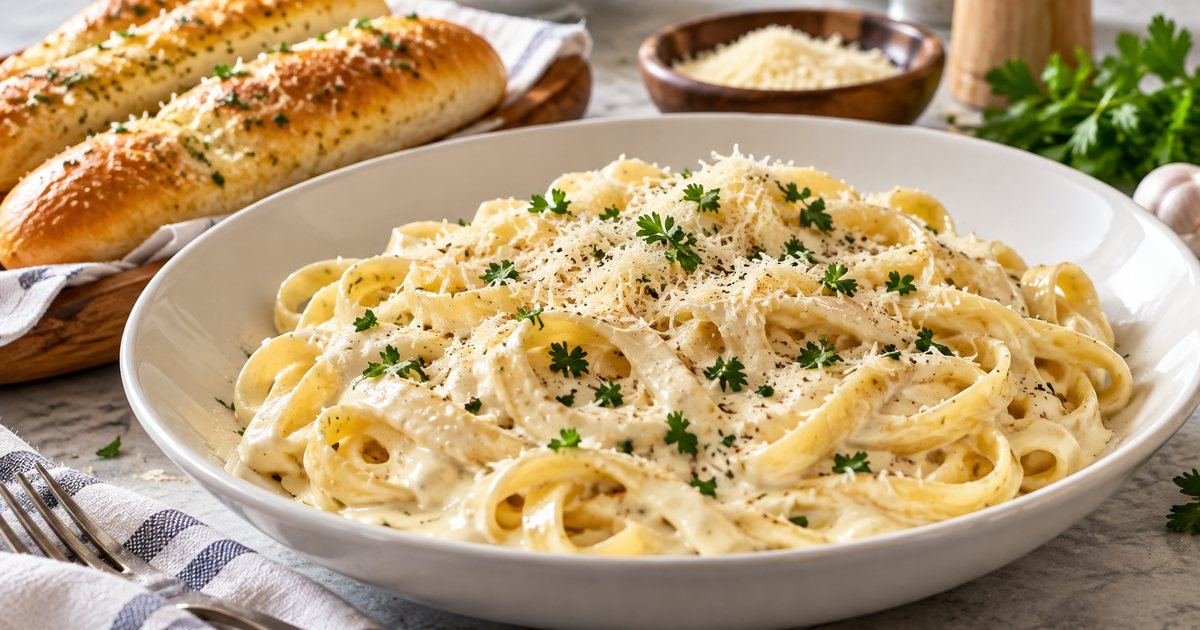
Olive Garden-style Alfredo sauce is rich, creamy, buttery, and built around Parmesan flavor. This Olive Garden Alfredo sauce copycat recipe gives beginners a straightforward homemade version using butter, heavy cream, garlic, Parmesan, and a little cream cheese for extra body.
The sauce comes together in about 20 minutes and works with fettuccine, chicken, shrimp, vegetables, or baked pasta. The most important technique is gentle heat. Boiling cream aggressively or adding cheese over very high heat can make the sauce separate or turn grainy.
Olive Garden Alfredo Sauce Copycat Recipe
This is an independent copycat-style recipe rather than an official restaurant formula. The goal is to create the creamy, garlic-forward, Parmesan-rich profile people expect from a restaurant-style Alfredo while keeping the method simple enough for a first-time sauce maker.
Traditional Italian fettuccine Alfredo is often much simpler than American restaurant versions, relying primarily on butter, cheese, and pasta water. This recipe follows the richer American-style approach with cream because that is the texture most readers expect from a copycat restaurant sauce.
Use freshly grated Parmesan whenever possible. Pre-shredded cheese often contains anti-caking ingredients that can interfere with smooth melting.
Ingredients You’ll Need
For about 4 to 6 servings, use:
- 4 tablespoons unsalted butter
- 2 cloves garlic, finely minced
- 2 cups heavy cream
- 2 ounces cream cheese, softened
- 1 1/4 cups finely grated Parmesan cheese
- 1/4 teaspoon black pepper
- Salt to taste
- 12 ounces fettuccine, optional for serving
- Chopped parsley, optional
Cream cheese is not required in every Alfredo recipe, but a small amount helps stabilize the sauce and gives beginners a little more margin for error. It also creates the thick, restaurant-style body many people want.
Do not use powdered shelf-stable Parmesan if you want the smoothest texture. A wedge of Parmesan grated just before cooking melts more evenly.
Prepare the Pasta First
If you are serving the sauce with fettuccine, bring a large pot of salted water to a boil before you start the sauce. The sauce cooks quickly, so it helps to have both parts moving at the same time.
Cook the pasta until just tender, following the package directions. Before draining, save about 1 cup of pasta water.
Pasta water contains starch, which can help loosen the sauce while keeping it cohesive. You may not need all of it, but saving some gives you an easy way to adjust consistency at the end.
How to Make the Alfredo Sauce
- Melt the butter in a large skillet or saucepan over medium-low heat.
- Add the minced garlic and cook for about 30 seconds, just until fragrant. Do not let it brown.
- Pour in the heavy cream and whisk in the softened cream cheese.
- Cook gently for 4 to 5 minutes, stirring often, until the cream cheese has melted and the mixture is hot but not aggressively boiling.
- Reduce the heat to low and add the Parmesan a small handful at a time, whisking until each addition melts before adding more.
- Add black pepper and taste before adding salt because Parmesan already contributes saltiness.
- Add the drained pasta and toss until coated. Use a splash of reserved pasta water if the sauce feels too thick.
- Serve immediately with extra Parmesan or parsley if desired.
Keep the heat low once the cheese goes in. High heat can tighten the proteins in the cheese and make the sauce grainy.
How to Keep Alfredo Sauce Smooth
Freshly grated cheese is the first advantage. Finely grated Parmesan melts faster and requires less heat than coarse shreds.
Add the cheese gradually instead of dumping it in all at once. Small additions give the sauce time to emulsify and stay smooth.
Do not let the cream boil hard. A gentle simmer is enough to warm and slightly reduce it. Once the Parmesan is added, low heat is safer.
If the sauce becomes slightly grainy, remove it from the heat and whisk in a tablespoon or two of warm cream or pasta water. Sometimes lowering the temperature is enough to bring the sauce back together.
How Thick Should Alfredo Sauce Be?
The sauce should coat the back of a spoon but still move easily around the pan. Remember that Alfredo thickens as it cools and as the pasta absorbs moisture.
If your sauce looks slightly thinner than you want while it is still very hot, wait a minute before adding more cheese. It may thicken naturally.
For a sauce that is too thick, stir in warm pasta water, milk, or cream 1 tablespoon at a time. For a sauce that is too thin, simmer gently for another minute or add a small amount of finely grated Parmesan.
Best Pasta and Protein Pairings
Fettuccine is the classic choice because its broad surface holds creamy sauce well. Linguine, tagliatelle, penne, rigatoni, and cheese tortellini also work.
- Grilled chicken breast
- Pan-seared shrimp
- Roasted broccoli
- Sautéed mushrooms
- Spinach
- Steamed peas
- Roasted asparagus
If you add cooked chicken or shrimp, stir it in at the end so it warms without overcooking. Vegetables can be folded directly into the pasta before serving.
Garlic bread or Olive Garden breadsticks copycat recipe are useful for catching leftover sauce on the plate. A crisp salad with our Olive Garden salad dressing copycat recipe can balance the richness of the cream and cheese.
Can You Make Alfredo Sauce Without Cream Cheese?
Yes. Leave out the cream cheese and use the same amount of heavy cream. Simmer the cream for an extra minute or two before adding Parmesan so it reduces slightly.
The result will be a little lighter and may require more careful temperature control, but it will still be creamy.
If you prefer a more traditional direction, you can reduce the cream further and rely more heavily on butter, Parmesan, and pasta water. That will taste less like an American chain-restaurant sauce and more like a simple Italian-style preparation.
Common Mistakes to Avoid
Do not brown the garlic. Alfredo is supposed to taste creamy and mellow, and deeply browned garlic can introduce bitterness.
Avoid high heat after adding cheese. This is one of the most common causes of grainy sauce.
Do not oversalt early. Parmesan can be quite salty, so taste after the cheese melts.
Finally, do not let finished Alfredo sit over heat for a long time. It thickens quickly and can separate. Serve it soon after mixing it with the pasta.
How to Reheat Alfredo Sauce
Reheat Alfredo gently on the stovetop over low heat. Add a splash of milk or cream and stir frequently until the sauce loosens and becomes creamy again.
If reheating in the microwave, use short intervals at medium power and stir between each interval. High heat can cause the sauce to separate.
For best quality, refrigerate leftovers promptly in a covered container and use them within 3 to 4 days. Cream sauces do not freeze especially well because they can separate after thawing.
FAQs: Olive Garden Alfredo Sauce Copycat Recipe
Q. Is this the official Olive Garden Alfredo sauce recipe?
A. No. This is an independent copycat-style recipe designed to create a similar rich, creamy Parmesan sauce at home.
Q. Can I use milk instead of heavy cream?
A. You can, but the sauce will be thinner and less rich. Half-and-half is a better substitute if you want a lighter sauce that still has some body.
Q. Why did my Alfredo sauce turn grainy?
A. The heat was probably too high or the cheese was added too quickly. Lower the heat and add finely grated Parmesan gradually.
Q. What is the best cheese for Alfredo sauce?
A. Freshly grated Parmesan is the easiest choice for a smooth, savory sauce. Avoid shelf-stable powdered cheese if texture is your priority.
Conclusion
This Olive Garden Alfredo sauce copycat recipe gives beginners a reliable way to make a rich, creamy Parmesan sauce with familiar ingredients. Gentle heat, freshly grated cheese, and gradual mixing are the three details that matter most.
Start with fettuccine, then add chicken, shrimp, or vegetables once you are comfortable with the base sauce. Serve it immediately for the smoothest texture, and save a little pasta water in case you need to adjust the consistency.
Disclaimer: This homemade recipe is an independent copycat-style interpretation and is not an official Olive Garden recipe. Restaurant ingredients and preparation methods may differ. Refrigerate leftovers promptly and follow safe food-handling practices.