Olive Garden Breadsticks Copycat Recipe

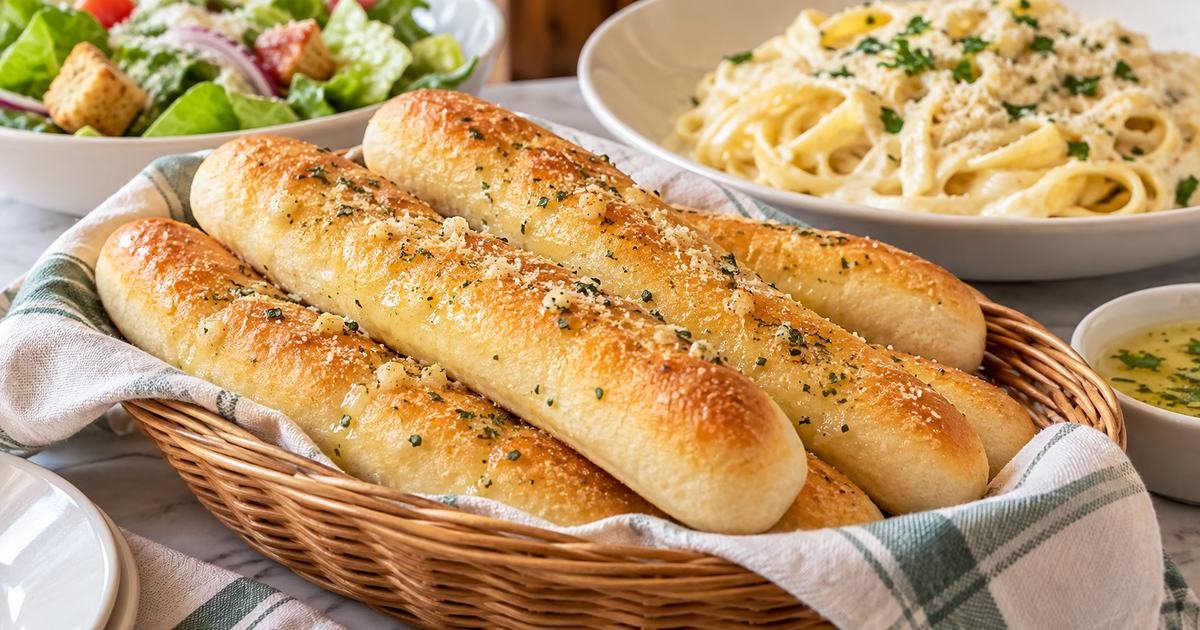
Olive Garden-style breadsticks are soft, lightly chewy, buttery, and finished with garlic seasoning. This Olive Garden breadsticks copycat recipe gives beginners a practical way to make a similar restaurant-style bread at home with basic yeast dough and a simple garlic-butter topping.
The recipe is not difficult, but the dough needs time to rise. Most of the work is hands-off, so you can prepare the breadsticks while making soup, salad, pasta, or our Olive Garden Alfredo sauce copycat recipe.
Olive Garden Breadsticks Copycat Recipe for Beginners
This is an independent copycat-style recipe, not an official restaurant formula. The goal is to create the qualities people expect from this type of breadstick: a soft interior, mild sweetness, a thin golden crust, and a buttery garlic finish.
A soft dough is important. If you add too much flour, the breadsticks can become dense and dry. If you use too little, the dough becomes difficult to shape. Aim for dough that is smooth, elastic, and slightly tacky.
You can mix and knead the dough by hand or with a stand mixer. The method is the same either way: develop enough gluten for structure, let the dough rise, shape it into sticks, let it rise again, then bake until lightly golden.
Ingredients You’ll Need
For about 12 breadsticks, use:
- 1 cup warm water, about 105°F to 110°F
- 2 1/4 teaspoons active dry yeast
- 2 tablespoons granulated sugar
- 2 tablespoons olive oil
- 1 teaspoon fine salt
- 3 to 3 1/2 cups all-purpose flour
- 3 tablespoons unsalted butter, melted
- 1/2 teaspoon garlic powder
- 1/4 teaspoon fine salt for finishing
Warm water helps activate the yeast. Water that is too hot can damage the yeast, while cold water slows the process considerably.
All-purpose flour gives these breadsticks a soft texture. Bread flour also works and produces slightly more chew.
Activate the Yeast
Pour the warm water into a large bowl. Stir in the yeast and sugar, then let the mixture stand for 5 to 10 minutes.
You should see a foamy layer forming on top. That shows the yeast is active. If the mixture stays completely flat, the yeast may be old or the water may have been too hot.
Once the yeast is foamy, stir in the olive oil and salt.
Mix and Knead the Dough
- Add 2 1/2 cups flour to the yeast mixture and stir until a shaggy dough forms.
- Add more flour about 1/4 cup at a time until the dough begins pulling away from the bowl.
- Turn the dough onto a lightly floured surface and knead for 8 to 10 minutes.
- Stop adding flour once the dough is soft, smooth, and slightly tacky but no longer wet.
- Form the dough into a ball.
If you use a stand mixer, knead with a dough hook for about 6 to 8 minutes on low to medium-low speed. The dough should clear most of the bowl while still feeling soft.
Do not keep adding flour just because the dough lightly sticks to your fingertip. A little tackiness helps produce softer breadsticks.
First Rise
Place the dough in a lightly greased bowl, turning it once so the surface is coated. Cover the bowl with plastic wrap or a clean kitchen towel.
Let the dough rise in a warm, draft-free place until roughly doubled in size. This usually takes 60 to 90 minutes.
Use the dough, not the clock, as your guide. A warm kitchen speeds fermentation, while a cool room slows it down.
How to Shape the Breadsticks
Gently press the risen dough to remove large air bubbles, then turn it onto a lightly floured surface.
Divide the dough into 12 equal pieces. A kitchen scale gives the most even results, but you can also divide by eye.
Roll each piece into a rope about 7 to 8 inches long. Keep the center and ends similar in thickness so the breadsticks bake evenly.
Arrange the shaped dough on a parchment-lined baking sheet with about 2 inches between pieces. Cover loosely and let the breadsticks rise again for 30 to 45 minutes, until visibly puffy.
Bake the Breadsticks
Preheat the oven to 400°F during the second rise.
Bake the breadsticks for about 11 to 14 minutes, until the tops are lightly golden. Avoid baking them until dark brown if you want a soft crust.
While they bake, mix the melted butter with garlic powder and finishing salt.
Brush the breadsticks generously with garlic butter as soon as they leave the oven. The warm surface absorbs the flavor and stays softer.
How to Make Them Extra Soft
The easiest way to keep breadsticks soft is to avoid over-flouring the dough. A dry dough produces dry bread.
Do not skip the second rise. Shaped breadsticks need time to expand before baking. Under-proofed dough often produces a tighter, heavier crumb.
Brush them with butter while hot and loosely cover the basket with a clean towel for several minutes before serving. That gentle trapped warmth softens the crust.
What to Serve With Breadsticks
- Olive Garden Alfredo sauce copycat recipe
- Spaghetti with marinara
- Chicken Parmesan
- Lasagna
- Minestrone soup
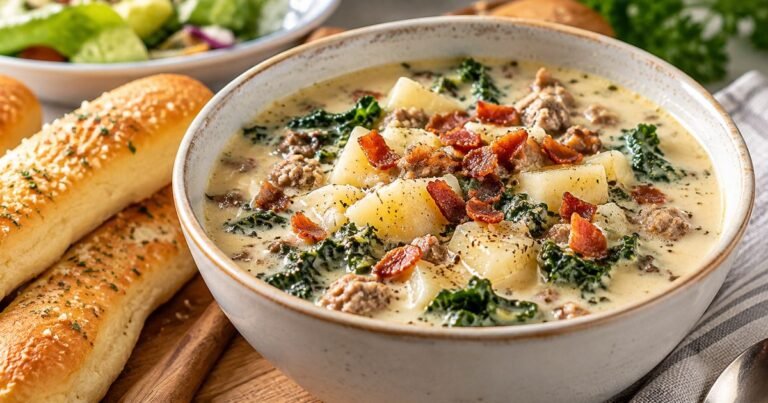
- Chicken gnocchi soup
- Green salad with Italian dressing
- Baked ziti
Breadsticks are especially useful with creamy or tomato-based dishes because they soak up extra sauce. Serve them hot rather than letting them sit uncovered on the table.
Common Mistakes to Avoid
Do not use hot water to activate yeast. Water that feels uncomfortably hot to your hand is probably too hot for the yeast.
Avoid over-flouring the dough. Add the final flour gradually and stop when the dough becomes manageable.
Do not rush the rises. Yeast dough needs enough time to expand and develop a light texture.
Finally, do not overbake. These breadsticks should be pale golden and soft, not deeply browned and crunchy.
Make-Ahead and Storage Tips
You can prepare the dough through the first rise, shape the breadsticks, cover them tightly, and refrigerate overnight. Let them sit at room temperature until puffy before baking.
Store baked breadsticks in an airtight container once they are completely cool. They are best within 1 to 2 days.
Reheat them in a 300°F oven for 5 to 8 minutes, then brush with a little fresh garlic butter.
You can also freeze cooled breadsticks for up to about 2 months for best quality. Thaw at room temperature and reheat before serving.
FAQs: Olive Garden Breadsticks Copycat Recipe
Q. Is this the official Olive Garden breadsticks recipe?
A. No. This is an independent copycat-style recipe designed to create similar soft, buttery garlic breadsticks at home.
Q. Can I use instant yeast?
A. Yes. Instant yeast can be mixed directly with the flour. Rise times may be slightly shorter, so watch the dough rather than relying only on the clock.
Q. Why are my breadsticks dense?
A. Too much flour, inactive yeast, insufficient kneading, or short rise times can all create dense breadsticks.
Q. Can I make these without a stand mixer?
A. Yes. Knead the dough by hand for about 8 to 10 minutes until it becomes smooth and elastic.
Conclusion
This Olive Garden breadsticks copycat recipe gives beginners a straightforward path to soft yeast breadsticks with a buttery garlic finish. The most important details are a soft dough, enough rise time, light baking, and brushing the breadsticks while they are still hot.
Serve them with Alfredo pasta, soup, salad, or marinara. Once you are comfortable with the basic dough, you can use the same method for garlic knots, dinner rolls, or other soft bread sides.
Disclaimer: This homemade recipe is an independent copycat-style interpretation and is not an official Olive Garden recipe. Restaurant ingredients and preparation methods may differ.