Raising Cane’s Sauce Copycat Recipe (Easy Homemade)

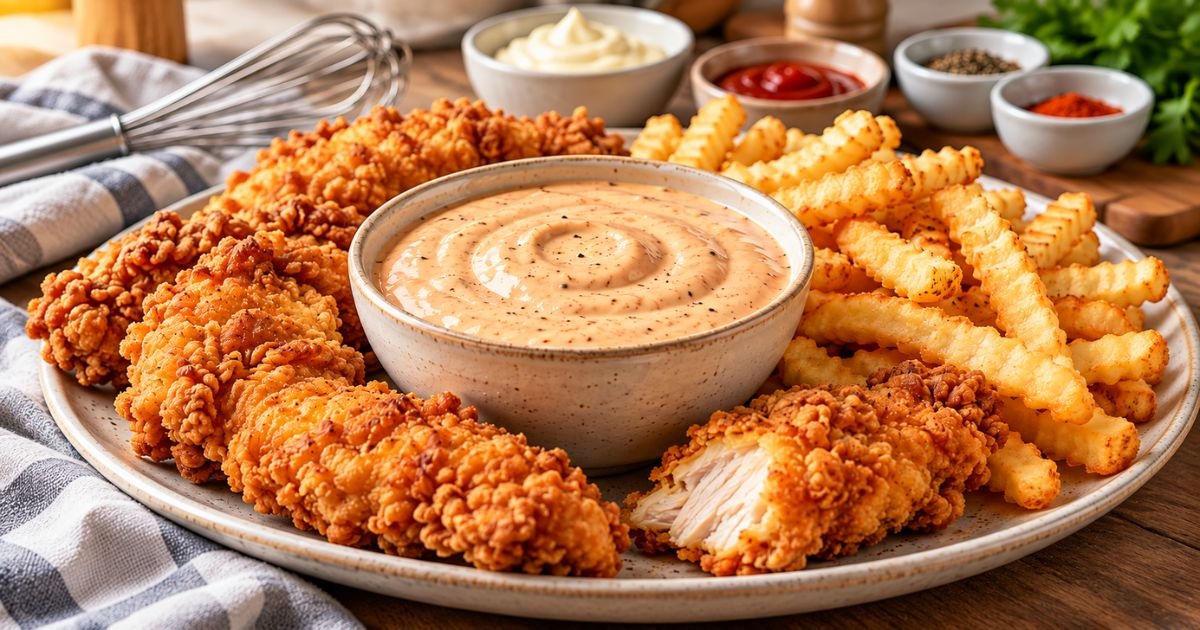
Raising Cane’s sauce is known for a thick, tangy flavor with a mild peppery kick. The restaurant keeps its exact recipe secret, so this Raising Cane’s sauce copycat recipe is an independent homemade version designed to capture the same creamy, savory style with everyday pantry ingredients.
You need only a bowl, a whisk, and about five minutes of active prep. The hardest part is letting the sauce rest in the refrigerator so the flavors have time to blend. Serve it with chicken fingers, fries, burgers, sandwiches, or roasted potatoes.
Raising Cane’s Sauce Copycat Recipe: What Makes It Work
Raising Cane’s describes its signature sauce as tangy with enough heat to add some spice, and says each restaurant makes it fresh daily. The company also says the actual formula is kept secret. That means a homemade version should be treated as a copycat-style interpretation, not the official recipe.
The flavor is built around a few familiar ideas: a creamy base, tomato sweetness, savory depth, acidity, black pepper, garlic, and a little warmth. The goal is balance. If one ingredient dominates, the sauce starts tasting like plain ketchup, mayonnaise, or barbecue sauce instead of a unified dip.
Resting time matters almost as much as the ingredient ratios. Freshly mixed sauce can taste sharp and separate. After several hours in the refrigerator, the garlic, pepper, Worcestershire sauce, and tomato flavors round out and become more cohesive.
Ingredients You’ll Need
For about 1 cup of sauce, use:
- 1/2 cup mayonnaise
- 1/4 cup ketchup
- 1 tablespoon Worcestershire sauce
- 1 teaspoon garlic powder
- 3/4 teaspoon freshly ground black pepper
- 1/2 teaspoon paprika
- 1/4 teaspoon onion powder
- 1/4 teaspoon kosher salt
- 1/4 teaspoon hot sauce, optional
- 1/2 teaspoon lemon juice, optional for extra brightness
Use a full-fat mayonnaise if you want the richest texture. A lighter mayonnaise works, but the sauce may be thinner and a little less rounded.
Freshly ground black pepper gives the sauce more aroma than pre-ground pepper. Start with the listed amount, then add more after the sauce rests if you prefer a stronger pepper bite.
Worcestershire sauce adds saltiness, acidity, sweetness, and savory depth in one ingredient. Check the label if you have dietary restrictions because formulations vary by brand.
How to Make Raising Cane’s Style Sauce
- Add the mayonnaise, ketchup, and Worcestershire sauce to a medium bowl. Whisk until the color is uniform and no mayonnaise streaks remain.
- Add garlic powder, black pepper, paprika, onion powder, salt, and the optional hot sauce. Whisk again until the seasonings are evenly distributed.
- Taste a small amount. At this point the sauce may taste sharper than it will later. Add the optional lemon juice only if you want a brighter finish.
- Cover the bowl or transfer the sauce to an airtight container.
- Refrigerate for at least 2 hours. For a deeper, more blended flavor, let it rest overnight.
- Stir before serving and taste again. Add a small pinch of black pepper or salt only if needed.
Avoid adding a large amount of extra seasoning before the resting period. Garlic, Worcestershire sauce, and pepper become more noticeable as the mixture sits.
Why the Resting Time Changes the Flavor
You can eat the sauce immediately, but a short rest makes a clear difference. Dried spices need time to hydrate, while the acidic and savory ingredients spread through the mayonnaise base.
Two hours is a practical minimum. Overnight is better when you are making the sauce for a party, game day, or meal prep.
If you plan to serve the sauce with hot fried chicken, keep the sauce cold until serving. The contrast between crisp, hot food and cool sauce makes the texture especially satisfying.
How to Adjust the Sauce to Your Taste
A copycat recipe works best when you adjust it to the food you are serving. Small changes are safer than large ones because this sauce is supposed to stay balanced.
For more tang, add 1/2 teaspoon of lemon juice or a few extra drops of Worcestershire sauce. For more heat, add a little hot sauce or a pinch of cayenne.
For a sweeter sauce, add 1/2 teaspoon of ketchup. For a smokier profile, add a small pinch of smoked paprika. Do not add too much at once because smoky flavors can quickly overpower the pepper and garlic.
If your sauce becomes too thin, whisk in another spoonful of mayonnaise. If it is too thick for drizzling, stir in a teaspoon of water or lemon juice.
What to Serve With This Copycat Sauce
Chicken fingers are the obvious match, but this sauce is more flexible than it looks. Its creamy, tangy profile works anywhere you might normally use fry sauce, burger sauce, or a savory mayonnaise dip.
- Oven-baked or air-fried chicken tenders
- Crinkle-cut, shoestring, or steak fries
- Sweet potato fries
- Chicken sandwiches
- Burgers and sliders
- Fried shrimp
- Onion rings
- Roasted potato wedges
- Grilled chicken wraps
- Raw vegetables such as carrots, celery, and bell pepper strips
For a restaurant-inspired plate, serve chicken fingers with fries, toasted bread, coleslaw, and a small ramekin of sauce. Keeping the sauce on the side helps the fried coating stay crisp.
Easy Chicken Finger Pairing for Beginners
You do not need deep frying to make a good pairing at home. Coat chicken tenderloins with seasoned flour or breadcrumbs, lightly spray them with oil, and cook them in an air fryer or oven until the chicken reaches a safe internal temperature.
For poultry, the USDA recommends a minimum internal temperature of 165°F. Use an instant-read thermometer in the thickest part rather than judging doneness only by color.
The sauce can be made first and refrigerated while the chicken cooks. That makes it a convenient component for an easy dinner because the flavors improve while you prepare the rest of the meal.
Storage and Food Safety
Store homemade sauce in a clean, airtight container in the refrigerator. Because this is a prepared, perishable mixture, a conservative approach is to use it within 3 to 4 days.
The USDA advises refrigerating perishable foods promptly and discarding foods that have stayed at room temperature for more than 2 hours, or more than 1 hour when the temperature is above 90°F.
Do not dip cooked chicken directly into the storage container if you plan to keep the remaining sauce. Spoon the amount you need into a separate serving dish to reduce cross-contact and contamination.
If the sauce develops an unusual odor, color, texture, or visible mold, discard it. When in doubt, make a fresh batch. The ingredients are inexpensive, and the recipe takes only a few minutes.
Common Mistakes to Avoid
The first mistake is using too much Worcestershire sauce. It has a concentrated flavor and can make the dip overly salty or sharp. Measure it rather than pouring directly from the bottle.
Another mistake is skipping the refrigerator rest. The sauce may still taste good right away, but it usually tastes more integrated after the seasonings hydrate.
Do not overcomplicate the recipe with many spices. A long ingredient list can muddy the flavor. Garlic, pepper, paprika, and onion powder provide plenty of seasoning when the proportions are right.
Finally, remember that ketchup brands and mayonnaise brands vary in sweetness, acidity, and salt. Taste after resting and make small adjustments instead of assuming every batch will need exactly the same final seasoning.
Make-Ahead and Batch Tips
This recipe is easy to scale. Double every ingredient for about 2 cups, which is useful for parties or family meals.
Mixing a larger batch in a bowl is usually easier than using a blender. A blender can incorporate extra air and change the texture. A whisk keeps the sauce smooth and dense.
If you are preparing it ahead, label the container with the date. Make the sauce the evening before you need it, then stir and portion it shortly before serving.
Looking for more restaurant-inspired cooking ideas? Browse our copycat recipes as this collection grows.
FAQs: Raising Cane’s Sauce Copycat Recipe
Q. Is this the official Raising Cane’s sauce recipe?
A. No. Raising Cane’s says its recipe is secret. This is an independent copycat-style recipe designed to mimic the sauce’s tangy, creamy, peppery character.
Q. Can I make this sauce without Worcestershire sauce?
A. Yes, but the flavor will be less savory. Try a small amount of soy sauce plus a few drops of lemon juice, then adjust carefully because soy sauce can be salty.
Q. How long should the sauce rest before serving?
A. Give it at least 2 hours in the refrigerator. Overnight resting usually produces a more blended flavor.
Q. Can I freeze this sauce?
A. Freezing is not ideal because mayonnaise-based sauces can separate after thawing. Make a smaller fresh batch instead.
Conclusion
This Raising Cane’s sauce copycat recipe gives beginners an easy way to make a creamy, tangy, peppery dipping sauce with pantry staples. The key is simple seasoning, careful balancing, and enough refrigerator time for the flavors to come together.
Mix it a few hours before dinner, pair it with chicken fingers or fries, and adjust the pepper or acidity after it rests. Once you know the basic ratio, it is easy to make the sauce your own.
Disclaimer: This homemade recipe is an independent copycat-style interpretation and is not an official Raising Cane’s recipe. Restaurant formulations may differ. Follow safe food-handling practices and check ingredient labels for allergens or dietary restrictions.